
Call-out fee: $80–$180
What most Sydney plumbers charge to attend. Ask for it on the phone. Anyone who will not name it is telling you something.
The first thing that happens is not a booking. It is a plumber telling you what to shut off right now, because the minutes before anyone arrives are where most of the damage is either done or prevented.
After-hours work is not the same trade as daytime work. The parts have to be on the van because no supplier is open, the diagnosis has to be right first time because there is no second attendance that night, and the person answering the phone has to be able to tell a genuine emergency from something that is cheaper on Monday.
That last part matters more than it sounds. Telling you a job can safely wait costs us the callout and saves you a premium, and it is the fastest way to know whether the outfit you have rung is worth using again.


Seasonal movement produces the most frustrating category of problem: something that backs up in one season, behaves perfectly in another, and is easy to write off as bad luck.
The flat country sloping gently to Duck River drains slowly, so saturated clay shifts pipes and keeps water sitting in stormwater lines after rain.
If you have called someone out twice in two years at roughly the same time of year, that is a pattern and it is worth saying on the phone. It changes what we look for.
The slowest part of an apartment emergency is often not the plumbing — it is the door. Fob access, a basement that needs a resident to open it, a car park with no after-hours entry: any of those can add half an hour while water is still running.
Auburn is a bustling Western Sydney hub (postcode 2144) bordered by Lidcombe, Berala and Granville, where federation cottages and unit blocks surround the famous eateries of Auburn Road. Between ageing house drains and hard-working commercial kitchens, blocked pipes are an everyday event here.
Two things worth doing before you ever need them: find your lot's isolation valve — usually in the laundry or a hallway cupboard — and save the building manager's after-hours number in your phone. Both take five minutes on a calm evening and both save real time on a bad one.
Auburn’s federation and interwar homes mostly run original earthenware sewer pipes whose cracked joints trap paper and scale until the line chokes.
A drainage system laid a century ago was built for a household that used a fraction of the water yours does. Add a second bathroom, a dishwasher and a washing machine, and lines that coped for decades start showing where they are weakest.
That is not an argument for replacing everything. It is an argument for knowing which sections are actually tired, so the money goes into those rather than into the whole run on the assumption that old means finished.
The restaurants, bakeries and grocers around Auburn Road and the town centre pour serious volume through old lines, and congealed fat is our most common call-out.
A café or kitchen with a backed-up floor waste has a different problem from a household. There is a health standard to meet, staff arriving in a few hours, and a grease line that has usually been narrowing for months before the night it finally closes over.
We clear and jet trade waste lines after hours specifically so premises open on time, and we will tell you honestly whether tonight buys you a week or a year. If the line is glazed hard with old fat, the answer is a scheduled jet and a service interval — not another call-out at emergency rates next month.
Two separate systems run under most properties around Auburn: stormwater, which takes rain from roofs and yards, and sewer, which takes everything from inside the house. They are not supposed to meet.
When they do — an illegal connection, a cracked line, a surcharging pit finding its way into the wrong pipe — heavy rain overwhelms a system never built for it, and the symptoms appear indoors. Working out which system has actually failed is the first thing we do, because the repair, the cost and who is responsible all follow from it.
What most Sydney plumbers charge to attend. Ask for it on the phone. Anyone who will not name it is telling you something.
Against roughly $120–$160 in business hours. Nights, weekends and public holidays sit at the top of the range.
Call-out, the first stretch of labour and minor parts, for the common jobs: an isolated burst, a blocked toilet, a failed valve.
Slab leaks, gas line faults and anything needing walls opened at 2am climb quickly. You hear the number before we start, not after.
If it can genuinely hold, isolated, contained, water off, we will say so on the phone and book you at daylight rates instead.
Indicative Sydney ranges for 2026. Your job gets a fixed figure before anything begins. Figures here are indicative of the 2026 Sydney market rather than a quote from us, you get your own number as a fixed price before any work starts.
Not a call centre. You describe what is happening, we tell you what to shut off right now, and whether this genuinely needs someone tonight. Sometimes it does not, and we say so.
The nearest available crew heads for Auburn with the common failure points already stocked on the van: pipe, fittings, valves, drain gear.
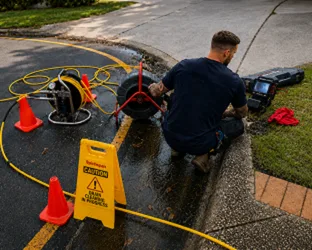
First job on site is stopping the damage: isolate, contain, make safe. Then you get a fixed price for the proper repair before it starts.

Most emergencies are permanently repaired on the spot. If a part has to wait for a supplier, you are left safe, watertight and functioning in the meantime.
Leave your details and an on-call plumber rings back. You will get instructions on what to isolate before anything else.
Call for the fastest response, any hour. Or send the form, after-hours enquiries get a callback from the on-call plumber, not an inbox.

Leave your details and our local Auburn team will call you back fast.